How to Get Travel SEO Recommendations Live
When I worked in-house in travel, there was never a shortage of things to do. A destination needed more visibility, a paid campaign needed attention, or a seasonal deadline was fast approaching.
The difficult part was deciding which work deserved the team’s time and getting the right people involved to deliver it.
I still see th
at gap now. A travel business can have a sound SEO strategy and a capable team, yet struggle to turn recommendations into changes on the website.
An audit can identify the opportunity. Someone still needs to write the content, approve the details, make the change and check what happened.
So, how do you turn a good SEO recommendation into a live website improvement? It starts with understanding what’s getting in the way.
Find the Actual Blocker
Two conversations with travel businesses highlighted just how different these blockers can be.
One business wanted to grow non-branded organic visibility and improve conversion. The opportunity was understood, but its internal web team was already at capacity. Any plan needed a realistic way to deliver the pages and improvements it recommended.
At another travel brand, CRO work had stalled because the person implementing it still had questions about why the changes were needed. A focused discussion helped resolve those questions and move the work forward.
Both businesses faced implementation challenges, but they needed different solutions. One needed more resource. The other needed clarity before moving forward.
Before adding another task to the list, establish what is holding the existing work up. Is it capacity, missing information, an approval, or uncertainty over who should act next?
That is why a travel SEO strategy needs to account for the people and decisions involved in delivery, alongside the search opportunity.
Separate the Work Before Choosing Priorities
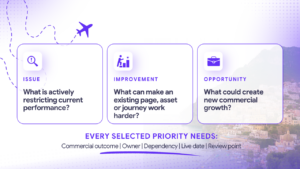
I find three categories useful when looking at an SEO backlog.
An issue is something restricting current performance. An important page might be unavailable to search engines, tracking might be broken, or customers migh
t be encountering friction in the booking journey.
An improvement makes an existing asset work better. That might mean strengthening a destination page, clarifying what a trip includes or adding useful internal links to a commercial page.
An opportunity creates something new, such as a page for a destination, audience or holiday type the website does not currently cover well.
These categories help you understand the work, but they don’t tell you what to tackle first. A valuable seasonal opportunity might be more important than fixing a minor technical issue.
Start with the destinations, products or audiences that matter most to the business, then work backwards to identify what needs doing. Availability, timing, margin and the evidence behind the recommendation should all inform that decision.
Give Each Priority a Workable Handover
A task called “improve the destination page” leaves a lot for the next person to work out.
Which page? What is missing? Who can confirm the product details? Does the booking route need changing? When does the work need to be ready?
For each selected prio
rity, make the commercial outcome, owner, dependency, live date and review point clear.
The person responsible doesn’t need to do everything themselves. They just need to know who’s doing what and keep the next decision moving forward.
Here’s what that could look like for an escorted-tour landing page. This illustrative example shows how a broad recommendation can become a practical plan, with clear responsibilities and next steps.
The proposed changes are clearer day-by-day information, visible inclusions and a checked enquiry link on the agreed tour page.
|
Field |
Illustrative handover |
|
Commercial outcome |
Help prospective travellers understand the tour and reach the right enquiry route, supporting qualified enquiries |
|
Owner |
The travel marketing manager is accountable for getting the agreed changes live |
|
Dependency |
Product confirms trip details, content updates the copy, and web support handles any template changes |
|
Live date |
Before the supporting campaign launches, with time for checks |
|
Review point |
Check the live page and tracking immediately, then review qualified enquiries and traffic quality after an agreed period |
The review should allow for seasonality, availability and other marketing activity. It can inform the next decision without assuming that any change in enquiries came from this page edit alone.
Before those changes go live, it’s also important to consider how they might affect the rest of your marketing activity.
Check the Change Across SEO, Paid Media and the Booking Journey
SEO changes rarely happen in isolation. A landing page update might improve organic performance, but it can also affect paid campaigns and the wider booking journey.
If travel PPC campaigns send people to the same landing page, the paid team should know what is changing and when. A rewritten headline, different enquiry form or amended booking link could affect the experience those campaigns rely on.
Before publishing, check the relevant links, mobile layout and enquiry or booking route. If a URL changes, include the redirect and internal-link updates in the work. If a form changes, check that the submission and tracking still work.
Once the changes are live, ask two questions: did we deliver what we planned, and is it making a difference?
A completed task answers the first. The second needs an appropriate review period and context, including seasonality, availability, campaign activity and changes in traffic quality.
Decide What Will Wait
Take one commercially important part of the travel business and choose the smallest group of actions needed to move it forward.
Make sure everyone knows what needs doing, who’s responsible and when the work should go live. Then agree which other work will wait.
That last decision protects the team’s ability to finish. If every new request becomes an immediate priority, the original plan quickly loses its meaning.
Even the best SEO recommendation won’t deliver results if it never makes it onto the website.
The real value comes from knowing what to prioritise, getting the right people involved and following through to see what works.
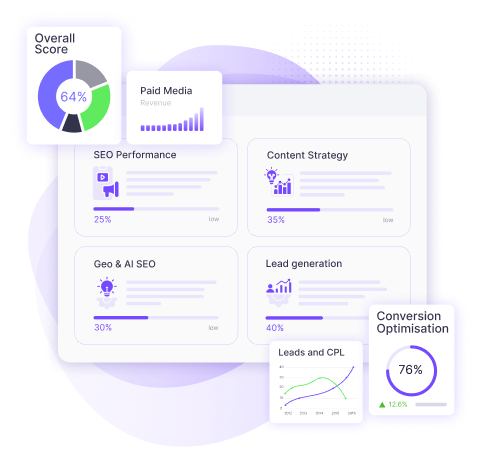
If you are unsure where the wider gaps in your marketing sit, complete the free InkSight Digital Growth Report. It asks 12 questions about your digital strategy and gives you a personalised report to help inform your next steps.